
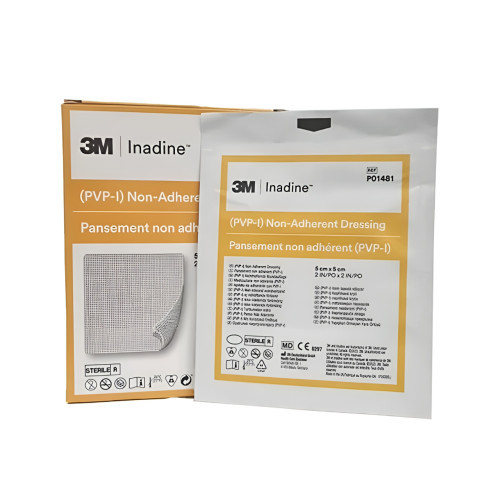

How Inadine Works
Inadine Dressing is constructed from a low-adherent viscose fabric gauze impregnated with an ointment containing polyethylene glycol (PEG), purified water, and 10% povidone-iodine (PVP-I). In the presence of wound exudate, the active PVP-I is slowly released from the dressing matrix, delivering sustained antimicrobial protection to the wound bed and surrounding tissue.
This controlled release helps maintain effective antimicrobial activity over time without frequent dressing changes, reducing patient discomfort and clinician workload. The PEG-based formulation keeps the dressing pliable, while the low-adherent design minimises trauma during removal.
Inadine, which is a non-sticky iodine-based surgical dressing, has become incredibly popular in both acute and long-term medical care settings. Using the powerful antiseptic properties of iodine, many medical professionals use Inadine for wounds such as superficial burns, skin tears, minor skin trauma, pressure ulcers and diabetic foot ulcers.
Coloured orange from the added iodine, Inadine wound dressings gradually change to white as the antiseptic product is used to protect the wound. With broad-spectrum antimicrobial properties that provide protection against bacteria, viruses, and fungi, the dressing should be changed once it begins to turn white to maximise the protective benefits from the product.
Commonly paired with additional wound dressings such as duoderm adhesive patches, drymax bandages, and zetuvit dressings, Inadine wound dressings can be incredibly helpful in supporting the healing process. Perfect for combining with absorptive drycare chair pads, these wound dressings reduce the risk of infection and minimise wound drainage.
Key Features
- Broad spectrum antimicrobial activity against bacteria, fungi, and viruses
- Sustained release of povidone-iodine (PVP-I) in the presence of exudate
- Low-adherent dressing minimises pain and tissue disruption
- Colour-change indicator — fades as iodine is depleted
- Can be cut to size and used with secondary dressings
- Cost-effective infection control for acute and chronic wounds
Indications — When to Use Inadine
- Chronic wounds such as venous leg ulcers, pressure injuries, and diabetic ulcers
- Contaminated or at-risk acute wounds including abrasions and lacerations
- Minor and partial-thickness burns requiring antimicrobial protection
- Surgical wounds and donor sites with infection risk
- Skin tears in elderly or immunocompromised patients
Contraindications and Precautions
Inadine contains povidone-iodine and is not suitable for all patients. Clinical precautions should be considered before use.
- Do not use in patients with iodine sensitivity or allergy
- Use with caution in patients with thyroid conditions
- Consult a clinician for use during pregnancy, breastfeeding, or in neonates
- Monitor if used on large wounds due to potential iodine absorption
Always refer to clinical guidelines or consult a healthcare professional if unsure about suitability.
Dressing Change Protocol
Follow this structured protocol for optimal wound care outcomes:
Step 1: Cleanse the Wound
Clean the wound using saline or an appropriate wound cleanser. Remove previous dressing residue and assess the wound.
Step 2: Apply the Dressing
Select a dressing size that extends 1–2 cm beyond the wound edges. Apply directly to the wound and secure with a secondary dressing.
Step 3: Monitor and Change
Change every 1 to 3 days or when the colour fades. Monitor wound progress and discontinue once infection resolves.
Inadine vs. Silver-Based Antimicrobial Dressings
| Feature | Inadine (PVP-I) | Silver-Based Dressings |
|---|---|---|
| Active Agent | Povidone-iodine (PVP-I) | Ionic silver |
| Spectrum | Broad — bacteria, fungi, viruses | Broad — mainly bacteria |
| Biofilm | Limited disruption | Strong biofilm activity |
| Contraindications | Iodine allergy, thyroid conditions | Rare silver allergy |
| Change Frequency | 1–3 days | 3–7 days |
| Cost | Cost-effective | Higher cost |
| Indicator | Yes — colour fades | Varies |
Order Inadine Dressings Online with Fast Australian Delivery
Shop now with fast Australia-wide delivery and expert support from Alpha Medical Solutions. Bulk and volume pricing available for facilities and providers. For assistance, call 1300 783 747, email info@alphamedicalsolutions.com.au, or shop online today.
Frequently Asked Questions (FAQs):
Find answers to common questions about Inadine dressings, including clinical use, antimicrobial action, dressing properties, and suitability for use across healthcare and home care settings.
What is Inadine used for?
Inadine is used for managing wounds that are infected or at risk of infection, including chronic wounds such as venous leg ulcers, pressure injuries, and diabetic foot ulcers; acute wounds such as traumatic lacerations and abrasions; burns; surgical sites; and donor sites.
It provides sustained broad-spectrum antimicrobial protection through the controlled release of povidone-iodine (PVP-I), helping reduce microbial load and support wound healing.
Does Inadine stick to the wound?
No. Inadine is specifically designed to be low-adherent to the wound bed. The polyethylene glycol (PEG)-based ointment keeps the dressing pliable and reduces tissue adherence.
This helps minimise trauma, pain, and disruption during dressing changes, making it suitable for sensitive, fragile, or slow-healing wounds.
What makes Inadine antimicrobial?
Inadine contains 10% povidone-iodine (PVP-I) impregnated within the dressing. In the presence of wound exudate, the PVP-I is gradually released into the wound bed.
This provides sustained, broad-spectrum antimicrobial activity against bacteria (including MRSA), fungi, and some viruses.
Can Inadine be used at home?
Yes, Inadine is suitable for use in both clinical and home care settings. However, for infected or complex wounds, it is important that a healthcare professional assesses the wound and confirms suitability before use.
Patients and carers should follow clinical guidance regarding application technique and dressing change frequency to ensure safe and effective outcomes.