
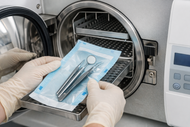
How Autoclave Pouches Ensure Sterile Instruments
In healthcare, dental clinics, day surgeries, aged care facilities and even some home-based care environments, infection prevention is critical. Reusable instruments must be properly sterilised and remain sterile until the moment they are used. Without an effective sterile barrier system, even a perfectly completed sterilisation cycle can be compromised.
That is where autoclave pouches play a vital role. Also referred to as sterilisation pouches, sterilization pouches, sterilisation bags, or sterilization bags, these specially engineered packaging systems allow sterilising agents to reach medical instruments while protecting them from contamination afterwards.
|
|
 |
 |

What Are Autoclave Pouches?
Autoclave pouches are single-use medical packaging devices designed to hold instruments during steam sterilisation. They form part of what is known as a sterile barrier system — a packaging solution that allows sterilisation to occur while maintaining sterility after processing.
Most sterilisation pouches are made from two primary materials:
- Medical-grade porous paper
- Transparent multilayer plastic film
The paper side allows steam or sterilising agents to penetrate the pouch. The plastic film side provides strength, visibility, and protection against contamination after sterilisation. Together, these layers create a sealed environment that supports both effective sterilisation and safe storage.
International infection control guidance from organisations such as the World Health Organization, Royal Australian College of General Practitioners and Therapeutic Goods Adminstration emphasises the importance of proper packaging in maintaining sterility after processing. Even the most advanced autoclave cannot compensate for inadequate packaging.
A Quick Reminder
We understand that compliance with and adherence to correct sterilisation practices are essential. Please find a quick reminder aligned with AS/NZS 4187:
- Packaging should occur in a designated clean area with clear separation from dirty zones.
- Instruments must be fully cleaned, dry, inspected, and correctly assembled before sealing.
- Pouches must allow for proper penetration and drying of the sterilant.
- Correct loading configuration and spacing are essential.
- Each pack should be labelled for full traceability (steriliser ID, cycle number, sterilisation date, and load details).
Each pouch must have either an autoclave indicator label or indicator tape applied to confirm that the pouch and its contents have been processed. Where the steriliser is fitted with a printout or tracking system, this may also be used to support verification and traceability. The sterilisation cycle number and date must be clearly recorded on each pouch
To support traceability requirements, best practices, and compliance, you may also consider these products:
- Autoclave Pouch Labels – 700 Indicator Stickers
- Autoclave Indicator Tape – 3m Roll
- Autoclave Indicator Tape Medipack – Roll
- Autoclave Printer Paper Roll – 57mm
The Science Behind Steam Sterilisation
To understand how autoclave pouches work, it helps to understand how an autoclave works.
Steam sterilisation uses:
- High-pressure saturated steam
- Temperatures typically between 121°C and 134°C
- Controlled exposure times
Moist heat works by denaturing proteins and destroying microorganisms, including bacteria, viruses, fungi and spores. For sterilisation to be effective, steam must make direct contact with every surface of the instrument.
This is why pouch design matters.
Step-by-Step: How Autoclave Pouches Work
1. Proper Loading of Instruments
Before sterilisation begins, instruments are:
- Cleaned thoroughly
- Dried completely
- Inspected for debris or damage
They are then placed inside the sterilisation pouch with enough space to allow steam circulation. Overloading the pouch can prevent proper penetration and lead to incomplete sterilisation.
2. Steam Penetration Through the Paper Side
During the autoclave cycle, steam enters the chamber and is forced through the porous paper side of the pouch.
The paper is specially engineered to:
- Allow steam penetration
- Resist tearing
- Prevent microbial entry after processing
The plastic film does not allow steam to pass through, which is why the porous paper side is essential for the sterilisation process.
Key principle: Steam must penetrate the pouch, contact the instrument, and then be fully evacuated during drying.
3. Air Removal and Moisture Control
Modern autoclaves remove air before introducing steam. Air pockets can prevent effective sterilisation, as trapped air acts as an insulator.
Once sterilisation is complete, the drying phase removes residual moisture. Proper drying is crucial because moisture can compromise the sterile barrier and encourage contamination.
A properly processed pouch should be:
- Completely dry
- Fully sealed
- Intact with no wrinkles or tears
4. Chemical Indicators Confirm Exposure
Most autoclave pouches include printed chemical indicators on the outside surface. These indicators change colour when exposed to specific sterilisation conditions such as temperature and steam.
It is important to understand that:
- Indicators confirm exposure to the sterilisation cycle
- They do not independently guarantee sterility
- They are one part of a broader monitoring process
Facilities may also use biological indicators and mechanical monitoring to verify sterilisation performance.
5. Maintaining Sterility After Processing
After the autoclave cycle and drying phase are complete, the pouch becomes a sterile barrier system.
The heat-sealed edges or adhesive closure ensure that:
- Microorganisms cannot enter
- The contents remain protected
- Instruments stay sterile until opened
The peel-open design allows aseptic presentation. When opened correctly, the instrument can be delivered onto a sterile field without direct handling.
Types of Sterilisation Pouches
Different environments require different types of sterilisation bags. Choosing the correct type supports efficiency and compliance.
|
Type |
Features |
Suitable For |
|---|---|---|
|
Self Seal Sterilisation Pouch |
Built-in adhesive strip |
Low-volume clinics, home care |
|
Heat Seal Sterilization Pouches |
Requires heat sealer |
High-volume practices |
|
Gusseted Sterilisation Bags |
Extra expansion space |
Bulky or multi-piece instruments |
|
Indicator-Printed Pouches |
Integrated chemical indicators |
Visual cycle confirmation |
A self seal sterilisation pouch is particularly useful where access to sealing equipment is limited. Heat seal versions provide strong, consistent closure for facilities processing larger volumes daily.
At Alpha Medical Solutions Pty. Ltd., we supply a broad range of autoclave pouches suitable for healthcare professionals across Australia you can explore.
As a 100% Australian-owned and operated supplier established in 2013, Alpha Medical Solutions supports healthcare providers with reliable infection control solutions.
Why Proper Use of Sterilisation Pouches Matters
Improper packaging can result in:
- Wet packs
- Seal failure
- Compromised sterility
- Instrument contamination
- Increased infection risk
Common mistakes include:
- Overfilling pouches
- Folding instruments tightly together
- Failing to seal properly
- Stacking pouches incorrectly in the autoclave
- Storing in humid environments
Best practice includes:
- Leaving adequate space around instruments
- Positioning pouches paper-side to paper-side, plastic-side to plastic-side
- Allowing full drying before handling
- Storing in a clean, dry, low-traffic area
Even minor handling damage can compromise the sterile barrier. If a pouch is torn, wet, punctured or unsealed, the instrument must be reprocessed.
Storage and Shelf Life Considerations
Sterility is considered event-related rather than time-related. This means that as long as:
- The pouch remains intact
- The seal is secure
- The packaging is dry
- Storage conditions are appropriate
…the instrument remains sterile.
However, facilities should follow internal policies regarding storage duration, rotation practices, and regular inspection of packaged items.
Choosing the Right Autoclave Pouch for Your Practice
When selecting sterilisation pouches, consider:
- Instrument size and weight
- Autoclave cycle parameters
- Volume of daily processing
- Compliance requirements
- Ease of use for staff
For small practices, mobile clinicians, or home-based providers, self-seal options provide convenience and flexibility. Larger facilities may prefer heat-sealed sterilization pouches for consistency and durability.
High-quality materials, reliable seals, and clearly printed indicators are all signs of dependable packaging.
If you are looking for reliable, high-quality sterilisation pouches and sterilisation bags, browse our full range of autoclave pouches at Alpha Medical Solutions today.
| Alpha Medical Solutions Pty Ltd. |
| Call us on: 1300-783-747 |
| Email: info@alphamedicalsolutions.com.au |

Frequently Asked Questions
Are autoclave pouches reusable?
No. Autoclave pouches are single-use products designed to maintain sterility once processed.
How long do sterilisation pouches keep instruments sterile?
Sterility depends on storage conditions and packaging integrity. If the pouch remains intact and dry, sterility is maintained until opened.
What do the colour indicators mean?
They show that the pouch has been exposed to sterilisation conditions but do not confirm sterility on their own.
Can I use sterilisation bags in any autoclave?
Most steam-compatible pouches work in standard steam autoclaves, but always check manufacturer compatibility guidelines.